
At Columbia, students spend their first years debating ancient philosophy, reading classic literature, and working through a famously rigorous Core Curriculum. Once they’re done with that, they walk out of class into Manhattan, one of the most modern cities on the planet.
Students often assume Columbia is simply looking for the smartest applicants it can find. If that were true, admissions would be so much easier. Every year, the university receives applications from thousands of students with exceptional grades, elite test scores, and impressive accomplishments. Columbia’s challenge is identifying which students seem most likely to thrive in their uniquely intellectual environment.
Now you’re probably wondering: what actually separates successful applicants from everyone else? Let’s get into it!
Who Actually Gets Into Columbia?
The reality of Columbia admissions, and elite admissions on the whole, is that academic excellence is the starting point, not the finish line.
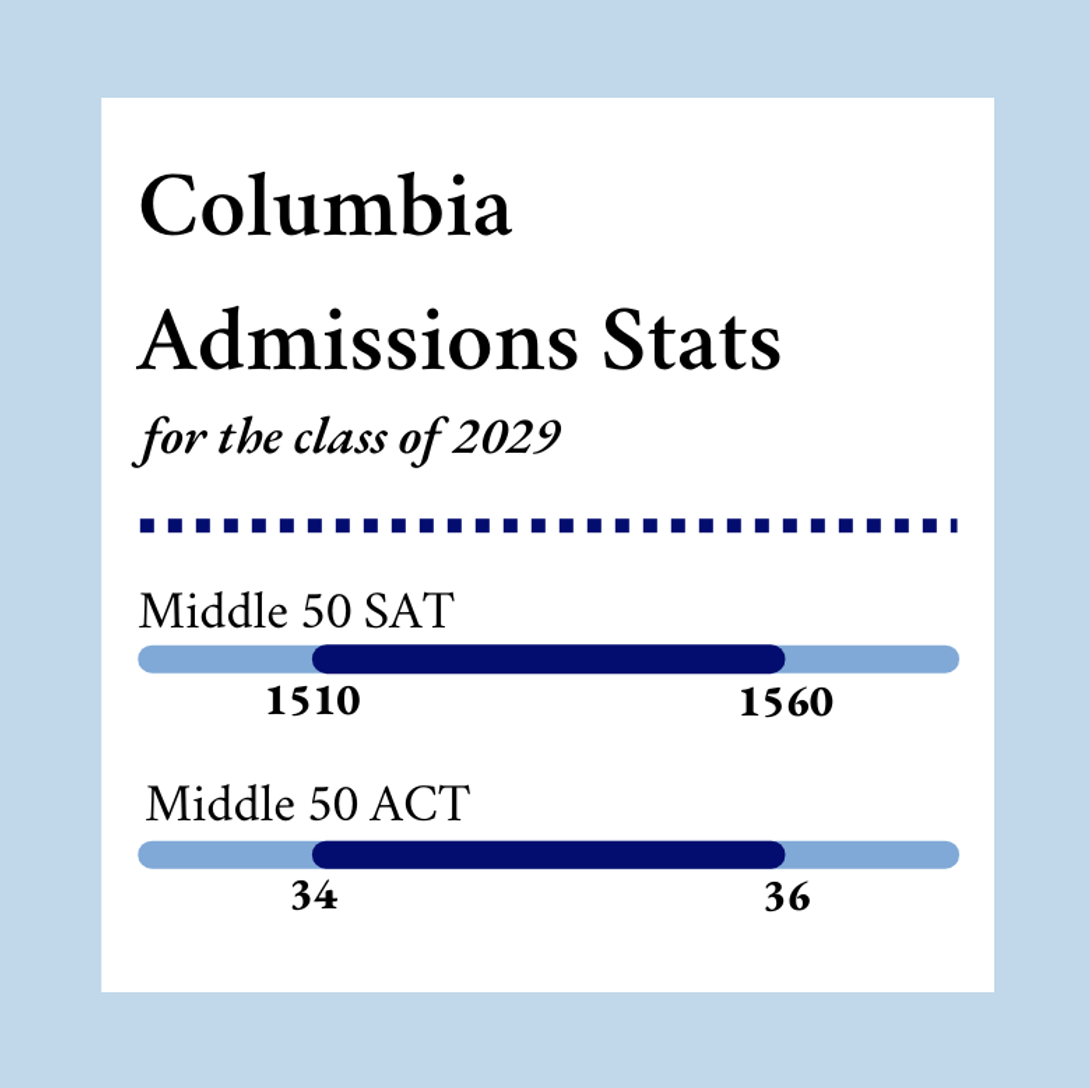
Most students who seriously contend for admission have already demonstrated outstanding academic ability. They take the most rigorous courses available, earn the best grades, and have killer scores on their standardized tests. Columbia's acceptance rate (4.5%) reflects just how competitive that pool has become.
Once admissions officers establish that a student can handle the work by assessing their academic performance, they begin evaluating something much harder to measure – your passion. Does this sound a little cringe? Sure. Is it true? Yes.
Columbia tends to attract students who are deeply interested in ideas and concepts. Students who like things like philosophy and history, regardless of their intended major. These are often students who read beyond assigned coursework, pursue academic topics outside the classroom, and spend significant amounts of time exploring subjects that genuinely fascinate them.
The strongest applicants have applications that feel authentic, not engineered. Their interests show up across multiple parts of the application because those interests are real. A student fascinated by urban policy might explore it through research, journalism, community engagement, and coursework. Another interested in neuroscience might pursue independent projects, research opportunities, and science communication. In reality, it doesn’t matter what the thing is, but it matters how you pursued it.
What Does Columbia Really Want to See?
A lot of applicants approach Columbia as if they are applying to a competition for the most impressive resume, and that mindset usually leads students in the wrong direction. They spend four years stuffing their resume with what they think looks good, don’t get into Columbia, and have no idea why. But we do!
Columbia admissions officers are not sitting around tallying leadership positions or counting the number of summer programs listed in an application. They are trying to understand how a student thinks, what they’ve done to explore their interests, and how deep they’ve gone into their academic passions.
Consider two prospective history majors, both with perfect grades and scores.
Student A has accumulated a long list of accomplishments: honor societies, leadership positions, volunteer work, student government, and a few history-oriented academic summer programs. Everything looks strong on paper, but there isn’t a lot to prove their interest in history.
Student B has a lot of the same accomplishments, but became obsessed with a particular historical question after encountering it in class. That curiosity led to archival research, historical writing, an internship at a museum, and eventually they even started a YouTube channel to make their favorite history topics fun.
Columbia’s going to like Student B. Of course, both students have demonstrated really high achievement, but only one has demonstrated intellectual obsession.
Columbia wants students who pursue interests because they are genuinely compelled by them. The admissions office is often looking for evidence that a student's curiosity extends beyond assignments, grades, and external expectations. They find that through your essays, your activities, and your rec letters.
How Does Columbia’s Core Curriculum Play Into Admissions?
Some applicants underestimate how much the Core Curriculum influences life at Columbia and how it affects admissions.
The Core is not simply a set of general education requirements, it is the intellectual foundation of the university. Students across disciplines engage with many of the same texts, questions, and conversations regardless of what they eventually major in. Students constantly encounter ideas outside their immediate academic interests. A future physicist may spend time debating political theory, while a prospective economist may find themselves immersed in literature and philosophy. This matters from an admissions standpoint because the Core requires a certain kind of student.
Most Ivies want kids who are super pointy, and while Columbia does want you to have a niche, they also want you to have the well-roundedness to enjoy thinking across disciplines. If you want to study STEM and find the idea of taking a class on classical music repulsive, Columbia is not going to be the school for you.
How Does Columbia Decide Who Gets in?
Some students think Columbia is looking for exactly one type of student and do everything to be that student. Some think they’ll be the exception to the rule. Neither are right! In reality, the admissions office is building a class, not filling a checklist.
In this video from Columbia Admissions, they talk about how they decide who gets in and who doesn’t.
As always, strong academics are mandatory, but once students clear that threshold, admissions officers begin evaluating how each applicant might contribute to the broader university community. They look at essays, recommendations, activities, context, personal background, intellectual interests, and character.
And according to Columbia, context plays an enormous role in these evaluations. Students come from dramatically different educational environments, family circumstances, and resource levels. Columbia evaluates achievement relative to opportunity rather than relying on a universal formula, which can put students from elite college prep schools who are not giving an A+ performance at a disadvantage.
The admissions office is also paying attention to evidence of initiative. We can talk about it until we’re blue in the face, but they really want students who actively pursue opportunities, create projects, explore interests independently, and engage deeply with their communities and passions. Columbia has a real self-starter feel, and if you haven’t really been self-starting, then you need to hop to it.
How Can I Get into Columbia?
First, stop thinking about admissions as a “who has the longest and most impressive resume” contest.
A) those don’t exist, and
B) that doesn’t work.
Start thinking about your application as an exercise in storytelling.
Every component of the application should help admissions officers understand what genuinely drives you and how you’ve developed your interests over time. The best way to show this is through your Columbia supplements. In their prompts, they want to learn about things like what media you consume and how you’ll utilize the core, but they also want to learn what you’ll get out of a Columbia education and what you want to do with it when you’re done.
So many students try to sound more intellectual than they actually are – sometimes because they rely on AI to write their essays for them. The result is writing that feels stiff, performative, and disconnected from the student behind it, which is the absolute last thing you want to do. The strongest essays communicate enthusiasm, reveal how a student thinks, and showcase their actual personalities.
Activities matter too, of course. But Columbia is generally less interested in the quantity of activities than the quality of engagement. Strong applicants have a few areas where they have invested significant time, energy, and thought rather than a dozen disconnected commitments.
Like all highly selective schools, Columbia admissions success is the product of years of exploration, intentional planning, and in-depth execution. You can’t fake that.
How Can TKG Help?
At The Koppelman Group, we help students develop applications that feel coherent and personal and that are strategically positioned to help you put your best foot forward.
Columbia admissions officers are trying to understand how students think and what their goals are, not just what they've accomplished. That means students need applications that communicate their interests clearly across every section, because Columbia needs to read your app and understand exactly why they’re the only school to help you accomplish your goals.
We work closely with students to identify authentic academic interests, develop meaningful extracurricular experiences, pursue research and enrichment opportunities, and build applications that make sense. We also guide students through every part of the process, whether that’s course selection in high school, building a college list, or planning standardized tests, all the way through the Common App essay and Columbia supplemental questions.
Most importantly, we help students avoid one of the biggest mistakes you can make in admissions – building an application around what you think colleges want instead of what makes you a good fit for that college. We don’t manufacture a cookie-cutter Columbia applicant, because that never works. Instead, we help shape your profile into the most compelling one possible that represents both your interests and your personality.
Conclusion
The students who stand out for Columbia are not the ones who simply accumulated the longest list of accomplishments. They’re the students who pursued their interests and did things throughout high school to prove their interests.
It’s important to note that understanding what Columbia values won't guarantee admission, but it will help you approach the process with a clearer strategy.
You can’t become someone you’re not and hope to get into Columbia. Instead, demonstrate who you already are and how you'll contribute to one of the most intellectually vibrant campuses in the country.
Need help getting into a Top 20 school? Reach out to us today.